

Africa’s Upgraded Forecast: Key Data Points
According to the IMF:
-
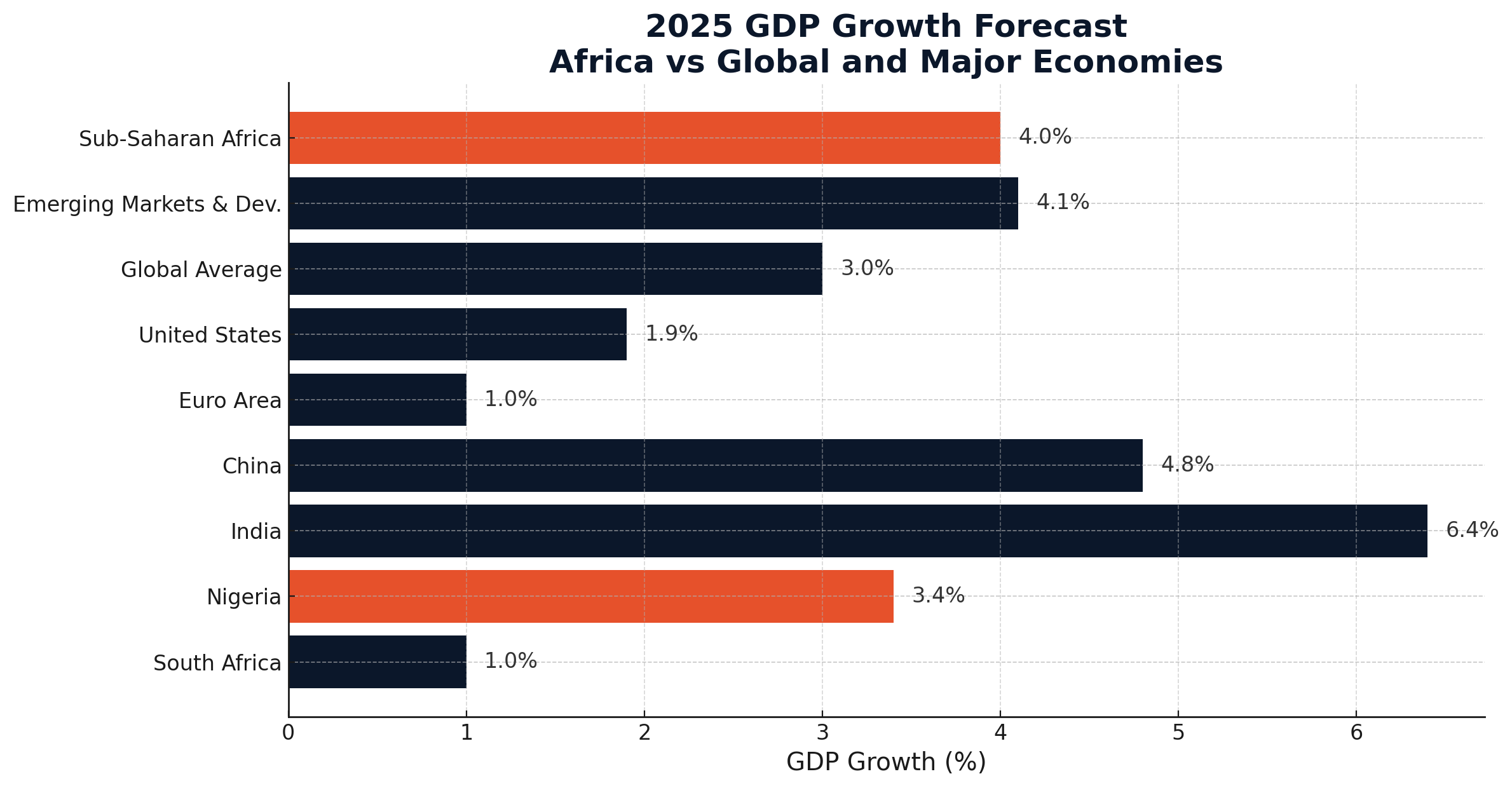
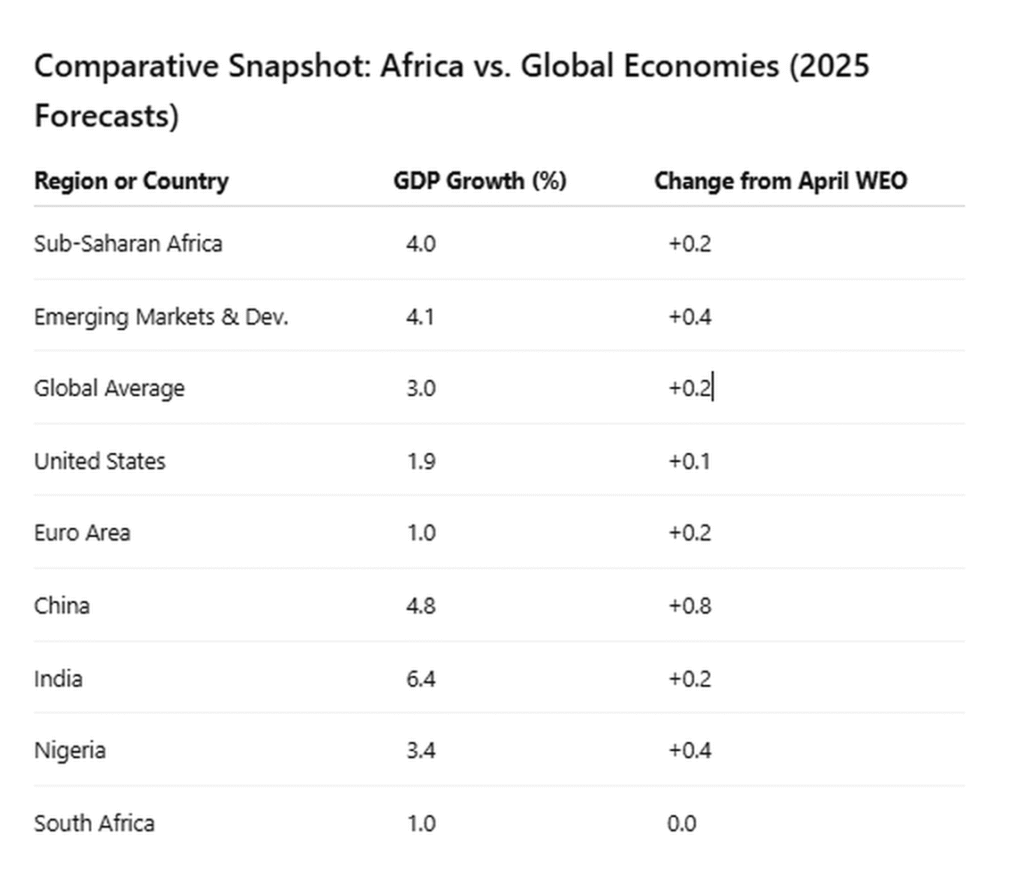
Sub-Saharan Africa’s GDP is expected to grow by 4.0% in 2025 (revised upward by 0.2 percentage points from April 2025).
-
Growth will further accelerate to 4.3% in 2026 (up by 0.1 percentage point).
-
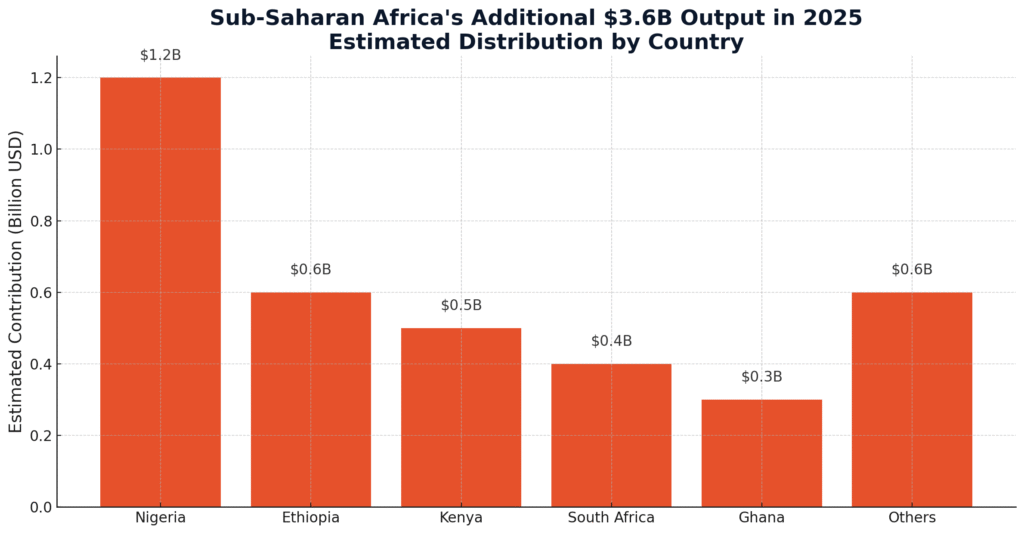
These revisions add $3.6 billion in output to the region’s economy in 2025 alone.
Compared to global projections:
-
World GDP is forecast at 3.0% in 2025 and 3.1% in 2026.
-
Emerging markets and developing economies are projected to grow at 4.1% in 2025 and 4.0% in 2026.
-
Sub-Saharan Africa’s growth exceeds the global average and remains among the strongest regional performers.
Country Breakdown: Nigeria and South Africa
Nigeria
-
2023: 2.9%
-
2024: 3.4%
-
2025: 3.4% (+0.4% revision)
-
2026: 3.2% (+0.5% revision)
South Africa
-
2023: 0.8%
-
2024: 0.5%
-
2025: 1.0% (no revision)
-
2026: 1.3% (no revision)
Nigeria’s upward revision reflects improving fundamentals and possible benefits from global capital flows and energy demand.
South Africa’s flat revision indicates continued structural constraints but shows moderate progress.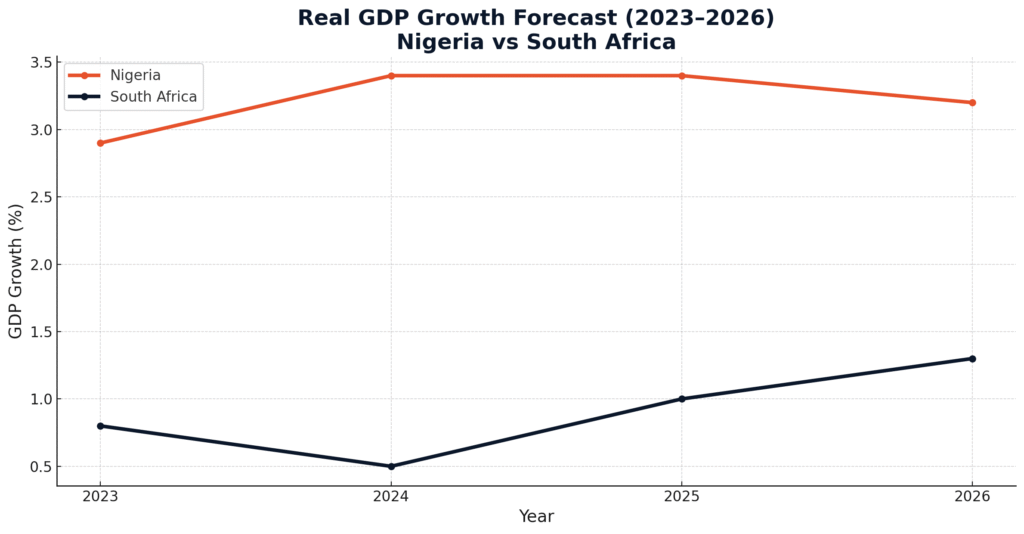
What’s Driving the Change?
Front-Loaded Global Trade
-
Global firms are accelerating trade flows due to tariff uncertainty.
-
The world trade volume has been revised up by 0.9 percentage points for 2025, benefiting export-oriented regions like Africa.
Weaker US Dollar & Eased Financial Conditions
-
The US dollar has depreciated considerably, easing import costs for African economies.
-
Capital inflows to emerging markets have resumed, supported by falling interest rates and lower global inflation.
Inflation Trends
-
Consumer price inflation in emerging markets and developing economies is projected at:
-
5.4% in 2025
-
4.5% in 2026
-
-
These levels are falling, providing monetary policy space for African central banks.
Global Pressures That Could Disrupt the Outlook
-
Tariff Risks: The IMF notes that if US tariffs revert to levels proposed earlier this year (up to 50% on key commodities like copper), global growth could drop by 0.2 percentage points.
-
Geopolitical Tensions: Escalation in the Middle East or Ukraine could increase energy prices and disrupt trade.
-
Inventory Overhang: Global stockpiling in early 2025 could reduce demand for imports later in the year.
-
Fiscal Stress: Global fiscal deficits remain high. A sudden increase in long-term interest rates could restrict financing conditions for African economies.
Find more on the World Economic Outlook Update, July 2025 Here

First Circle Capital, SpeedInvest, and Knife Capital Honored for Pioneering Support of African Startups at Oxford VC Awards
Three African venture capital (VC) fund managers—First Circle Capital, SpeedInvest, and Knife Capital—have been honored with prestigious awards for their exceptional efforts in supporting entrepreneurs and startups across the continent.

CityBlue Hotels Invests in Sustainable Agtech Startup Farm to Feed
CityBlue Hotels, a leading African hospitality chain, has announced a strategic investment in Farm to Feed, a B2B platform tackling food waste in Sub-Saharan Africa.

Egyptian AI recruitment startup Talents Arena secures $750K in Pre-Seed funding
Egyptian AI-driven recruitment platform Talents Arena has raised $750,000 in pre-seed funding.
The post IMF: Sub-Saharan Africa’s Economy to Grow by 4.0% in 2025, Adding $3.6 Billion in Output appeared first on Empower Africa.
